Japan’s large metropolitan areas around Tokyo, Osaka and Nagoya are served by highly efficient public transportation systems.
It is not surprising then, that many Japanese people do not even own a car – or even hold a driver’s license.
For exploring Japan’s big cities- for a visitor to Japan- a car is not only not necessary – its even quite stressful. Traffic in large cities tends to be heavy, orientation difficult, and parking inconvenient and expensive.
Outside the big cities, however, public transportation can be inconvenient or infrequent, and cars make it much easier to get around.
Driving outside of Japan’s major cities is surprisingly easy for visitors to the country, with excellent road infrastructure, plentiful signage in both Japanese and English, and Japanese drivers who are some of the most courteous in the world. English-language sat-navsystem systems making planning a trip very easy.
Driving License
The minimum age for driving in Japan is 18 years, and visitors will need an International Driving Permit (IDP) in order to rent and drive a car.
International driving permits are not issued in Japan and should be obtained in your home country in advance.
Please note that an International Driver’s Permit is not a standalone licence— an Australian licence must be carried along with it.
Foreign tourists can drive in Japan with a recognized international driving permit for a maximum of one year, starting from the date of their entry into Japan.
To get an International Driving Permit (IDP) in Australia, apply online or in person through an authorised motoring club like RACQ or My NRMA, which act on behalf of the Australian Automobile Association (AAA). You will need your Australian driver’s licence, a recent passport-style photo, and payment of around $50, plus postage.
Apply online for postal delivery or visit a participating branch for an on-the-spot IDP if you are travelling soon
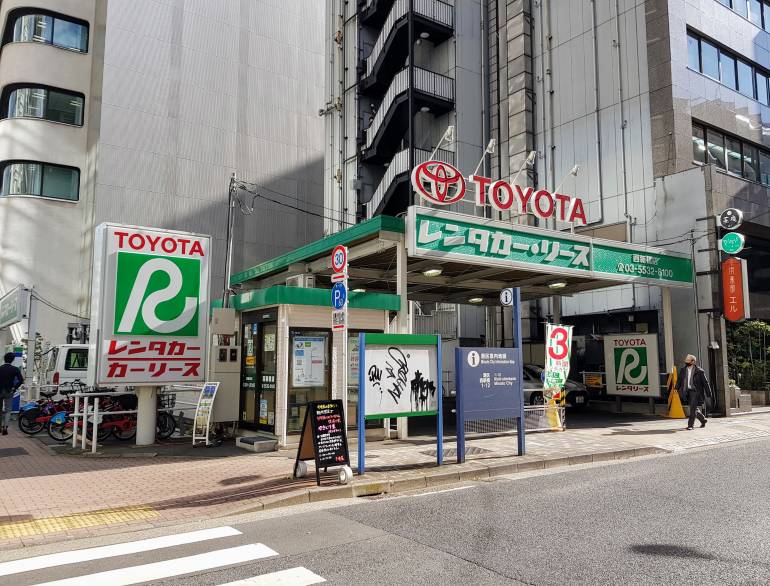
Car Rental
Japan’s leading car rental companies are Toyota Rentacar, Nippon Rentacar, Orix Rentacar, Times Car Rental (formerly known as Mazda Rentacar), Nissan Rentacar and Ekiren.
Each operates thousands of outlets across Japan, offering cars in all sizes and, in some cases, large vans, buses and RVs. These days, most companies have English online reservation systems or a phone number for reservations in English.
There are also a few independent reservation websites for foreign tourists that contract with one or more of the above rental companies. These include rentalcars.com and ToCoo! Travel which allow for English online reservations for multiple rental companies.
Typical rental fees are around 7,500 yen per 24-hour period for compact cars, 10,000 yen for mid sized cars, 15,000 yen for full sized cars and 20,000 yen for vans.
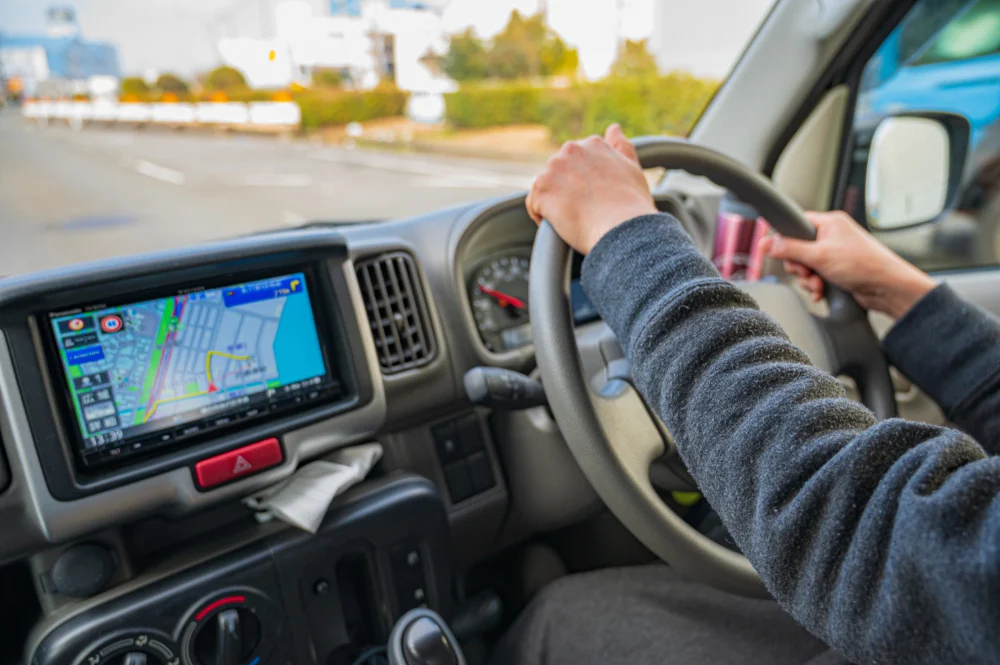
English language GPS Navigation
Rental cars will invariably be equipped with a GPS navigation system.
The systems in some vehicles can be set to display the map and menus and to read directions in English, however some English-capable systems are not available from every rental company or outlet. Whether the GPS system is in English or not, most users will find it easiest to input destinations by their phone number. It’s always best to ask on booking to make sure the car will have a full English GPS Nav.
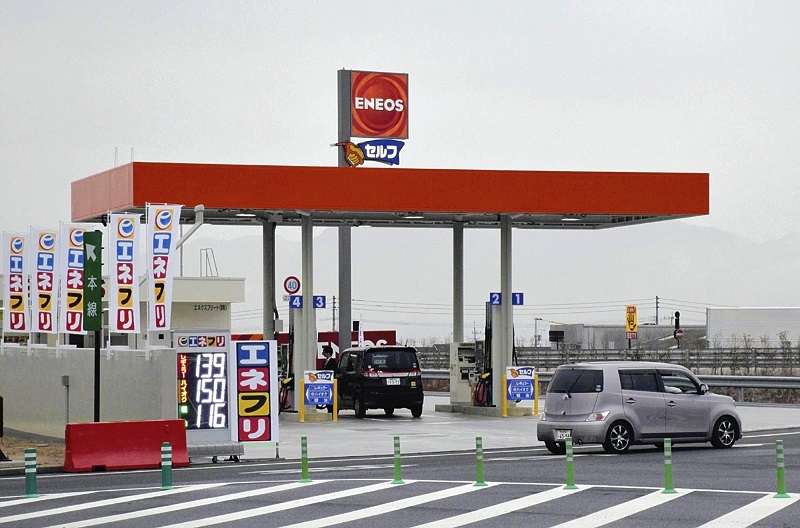
Petrol stations
Petrol stations are found all across Japan. They traditionally provide full service, although self-service stations have greatly increased over recent years. Many gas stations close during the night, while others are open 24 hours. A litre of regular gasoline costs roughly 180 yen (as of Dec 2025). High octane gas and diesel are also widely available. Payment is possible by credit card or cash.
Roads and rules
Cars drive on the left side of the road and have the driver’s seat and steering wheel on their right side.
The legal minimum age for driving is 18 years. Drinking and driving is prohibited.
Road signs and rules follow international standards, and most signs on major roads are in both Japanese and English.
Most roads in Japan are toll free with the exception of expressways, some scenic driving routes and a small number of toll tunnels. Road conditions tend to be good, although side streets in the cities can be rather narrow or even impassable to larger vehicles.